
Stephen Szermer Design Engineer & AI Capability Researcher
RISD-trained designer and full-stack engineer building at the intersection of human cognition and AI systems. Six Laws of AI-Era Software Engineering — observed through DevLex synthesis, instantiated as BIG Tools. AI domain expert for Brown University's Embodied Brain Technology Practicum. Director of GDG Providence (500+ members).
AI Capability
Research
Building systems that make humans more capable, not more dependent.
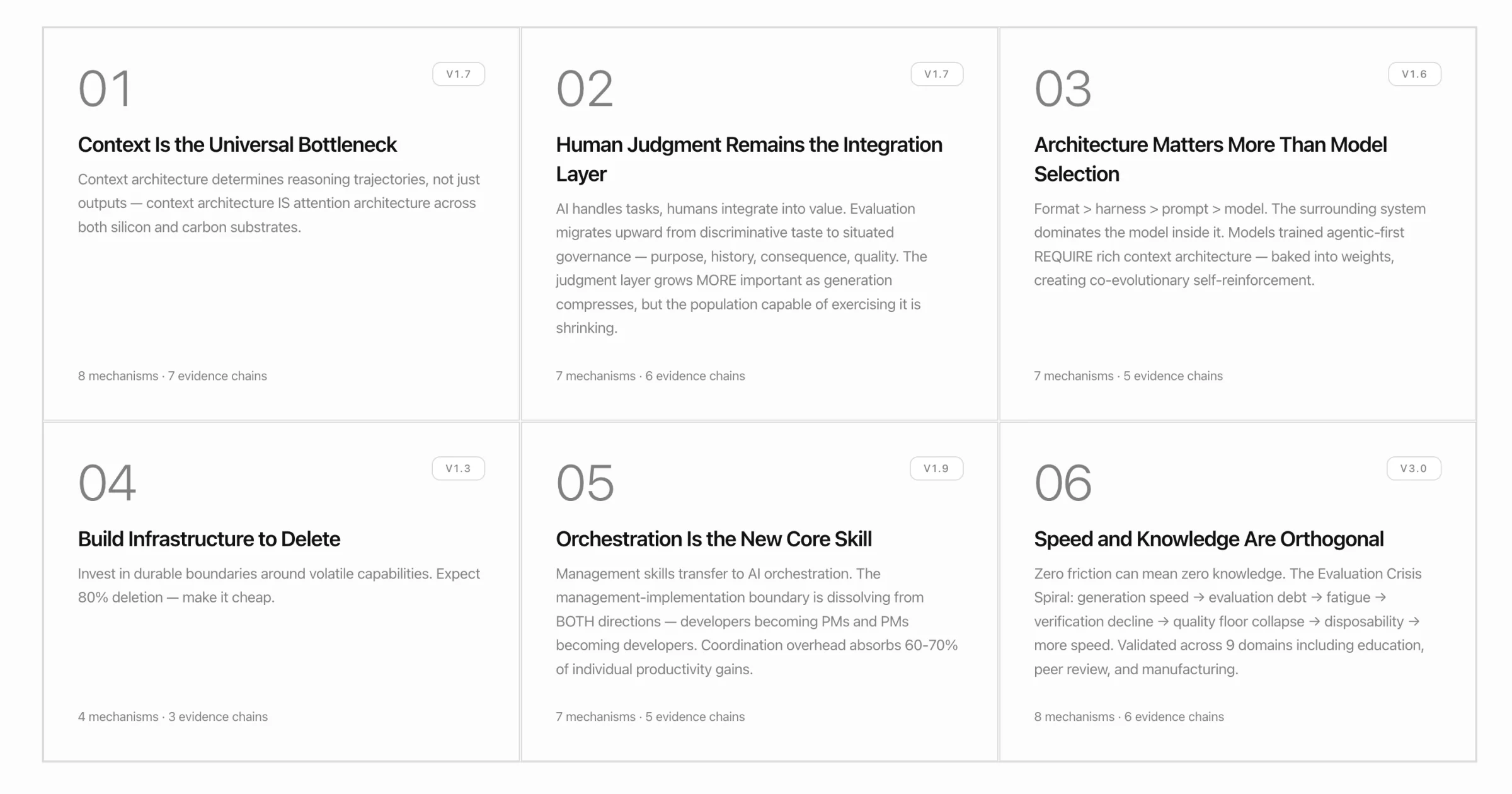
Author of the Six Laws of AI-Era Software Engineering — observed through DevLex synthesis and instantiated as BIG Tools. Documented the Evaluation Crisis Spiral: as AI generation speed increases, human evaluation capacity degrades. Validated across 9 domains including education and peer review.
Neuroscience Education
AI and creativity for Brown University's Embodied Brain Technology Practicum.
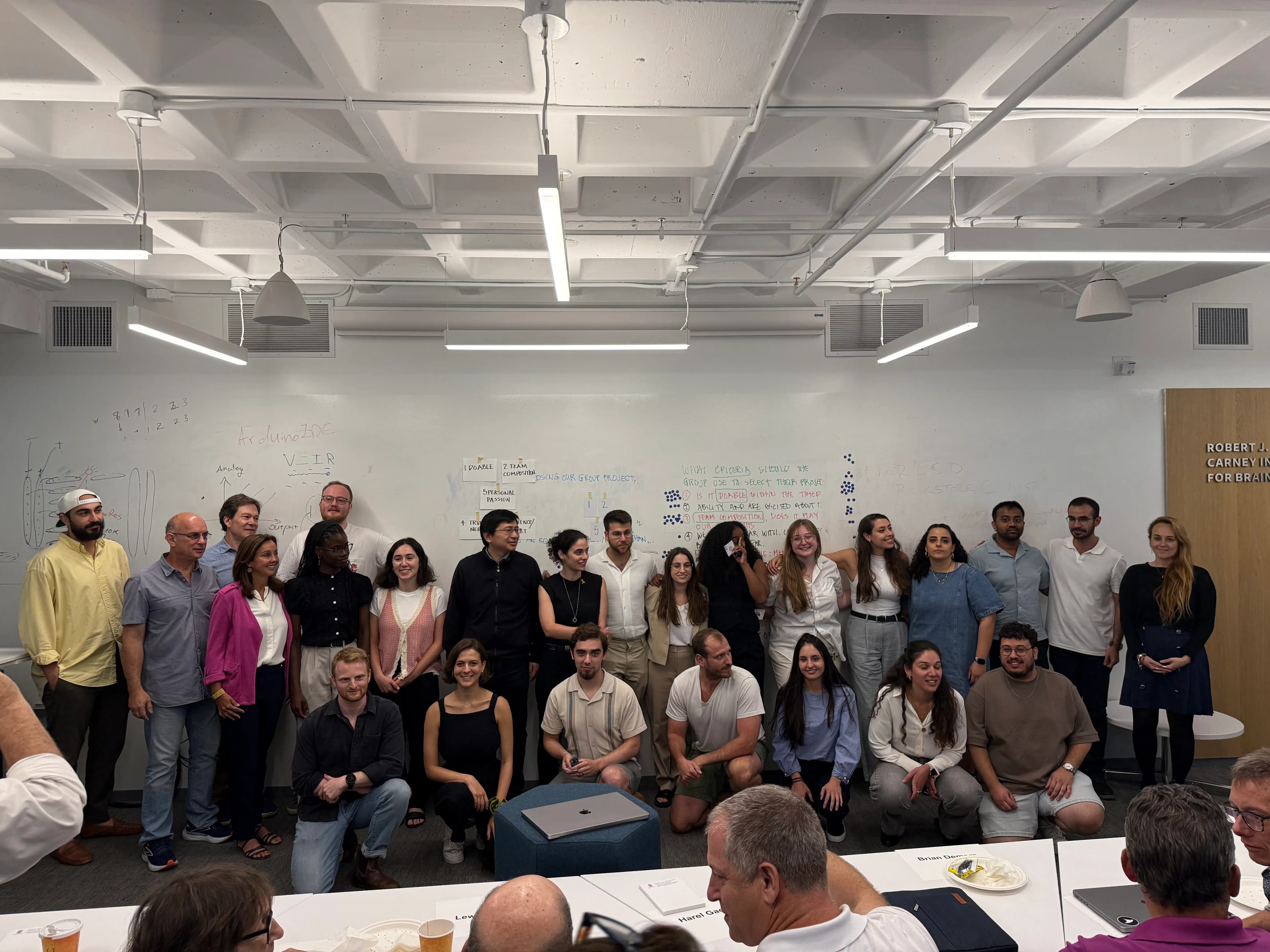
Teaching team member alongside neuroscientists and game designers for a cross-institutional course on idea generation (Brown, Ben-Gurion, MIT, Rochester, CMU). Led sessions on AI as creative companion, demonstrated the Threshold crisis decision-making prototype at RISD, and built a shared knowledge agent that grew smarter as the course progressed.
Enterprise UX Leadership
10 years leading design across complex domains.
A decade of enterprise design leadership across industrial IoT, enterprise risk and insurance, and large-scale healthcare, including building and leading design organizations. RISD MID in Industrial Design. Deep expertise in interaction design, progressive disclosure, and trust-critical interfaces.
AI Education & Community
Teaching humans how to think with AI, not defer to it.
Co-teaching the Embodied Brain Technology Practicum at Brown University with Chris Moore (Carney Institute) and Carl Moore (BIG Ideas methodology). Building the class curriculum and BIG Tools — the supporting toolkit for AI capability development. Director of GDG Providence (500+ members, 15+ events).
Portfolio
Building systems that amplify human capability — from AI-assisted knowledge tools to interaction designs that preserve human judgment under speed.
Threshold — Human Readiness Verification
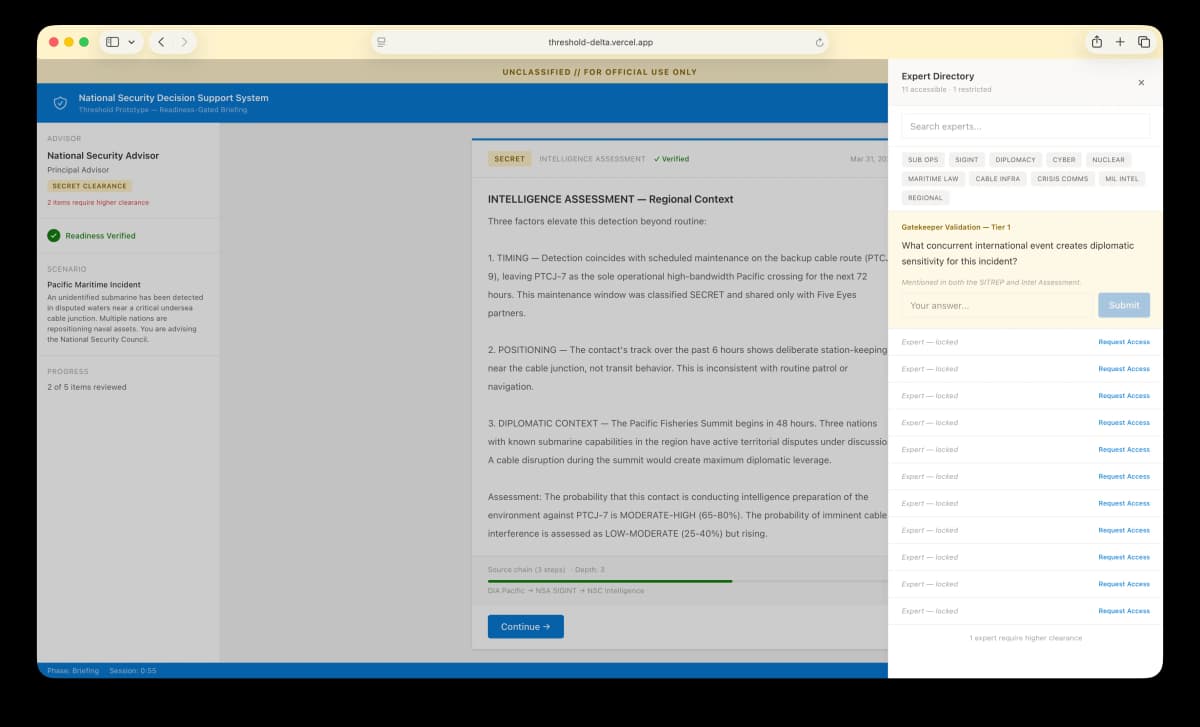
Carnegie-funded prototype for human readiness verification in high-stakes decision contexts. Ritual state machine with calming gate (4-7-8 breathing + biometric readiness), progressive knowledge disclosure, and realm-based access control. Built to prove that the right AI intervention point is a verified human on the receiving end.
Private Language — Knowledge Sovereignty
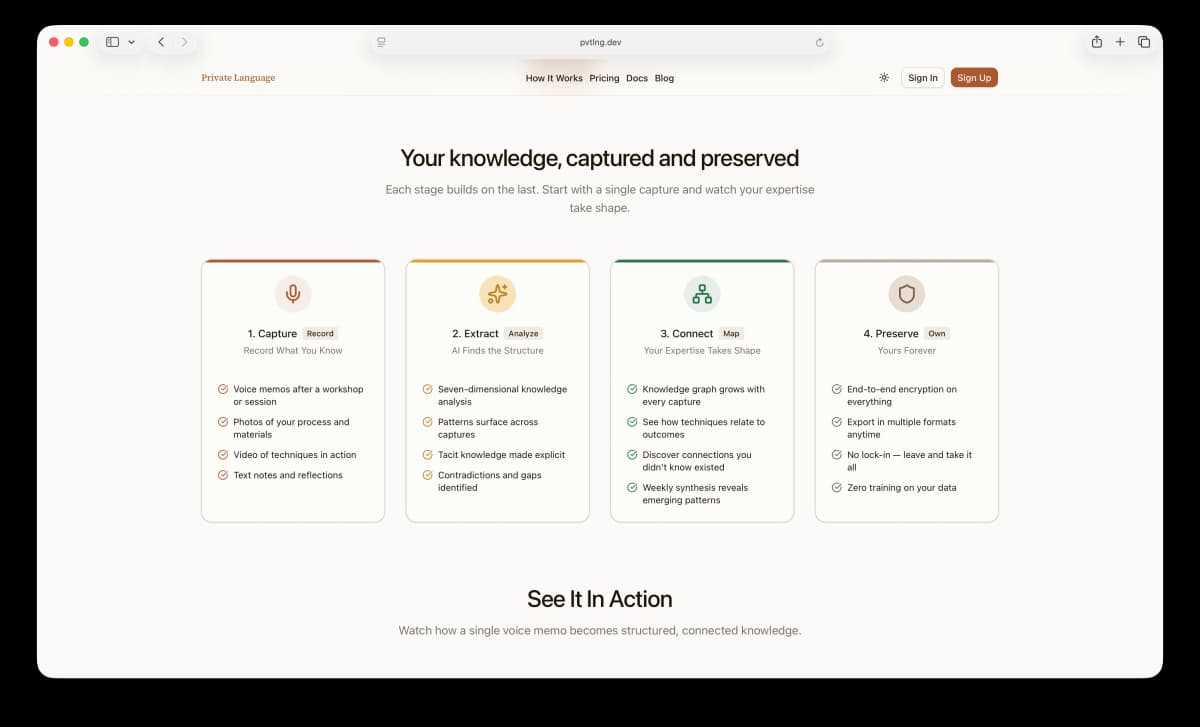
Knowledge sovereignty platform designed to make AI interactions compound rather than evaporate. Multi-modal capture, AI-powered insight extraction, semantic search, and a knowledge graph that surfaces connections users have forgotten. Live case study with 24 Brown/MIT/BGU students in the Embodied Brain Technology Practicum, Spring 2026.
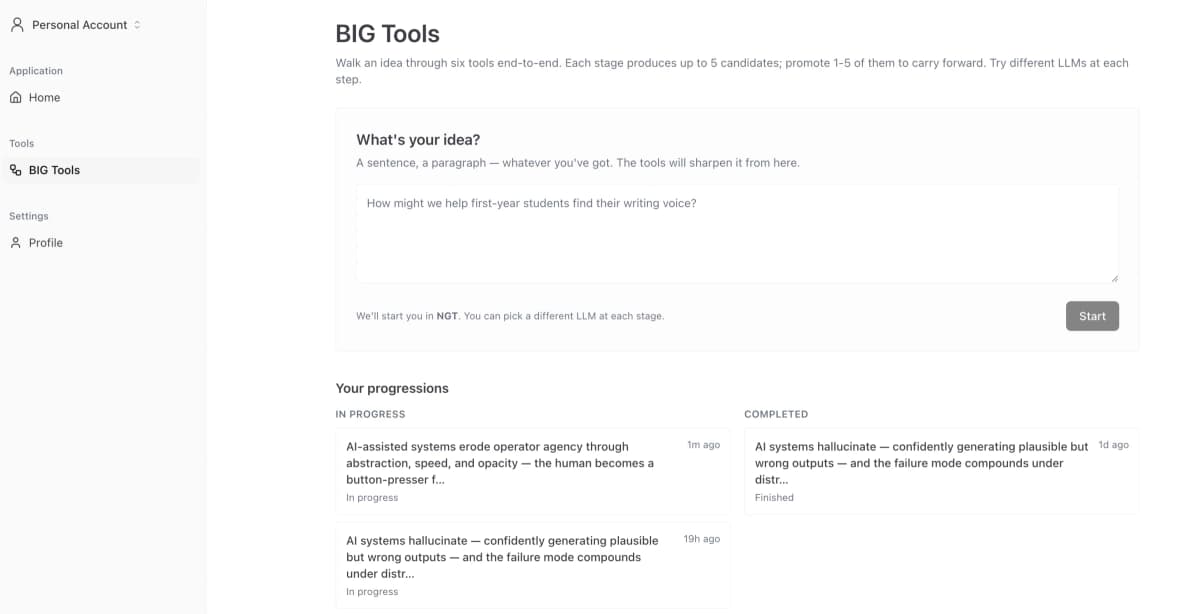
BIG Tools — Real Cognitive Work Toolkit
Software-architecture layer for an idea-development class I co-teach at Brown University with Chris Moore and Carl Moore. One Known-Knowns gate plus seven tools (Reframe, Alignment, Collaborate, Mixtape, Falsification, Friction-on-Demand, Tracker) governing how AI verifies and enhances user-generated work — never replaces it. Canonical content and the working application live at bigtools.dev.

Port Jefferson Ferry Digital Transformation
Led complete UX overhaul for 1.2M annual passengers serving Long Island Sound. Applied service design methodology and progressive disclosure to reduce support tickets 30% while modernizing 140-year-old maritime operation.
Research
Independent R&D — the substrate behind the Six Laws and BIG Tools. Repositories are private; framing is public.
BIG Tools Memory
Agent Memory Layer
The memory layer behind BIG Tools. It lets AI agents keep and reuse what they learn across sessions, so context builds up over time instead of resetting with every conversation.
Private RepositoryAXIOM
Trail Discovery & Syntopic Reading
Capability layer inside the BIG Tools memory architecture. Operates on the principle that memory quality is the moat, not storage. Surfaces non-obvious connections across reading material the way a well-kept commonplace book does — at machine speed.
Private RepositoryCommunity & Thought Leadership
GDG Providence
Chapter Director
Building a community at the intersection of Art, Design & Technology in Providence's innovation ecosystem.